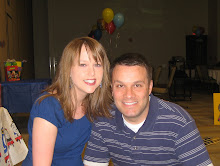
We hope everyone enjoyed a wonderful Thanksgiving!!! One of the blessings that Mark and I are especially thankful for this year is all of you who have offered to become Mark's living donor!!! The living donor nurse coordinator at UK commented that Mark must be a special person because they have never had so many phone calls from individuals wishing to donate to a patient in such a short period of time. So, once again, thanks to everyone who has expressed interest in donating.
About ten of our family members and friends have inquired about becoming Mark's living donor. Unfortunately, several of those individuals were ruled out due to having an incompatible blood type or health condition (i.e. high blood pressure, autoimmune disease, etc.) that makes donating too risky. I cannot express how fortunate Mark and I feel that so many of you were willing to literally give a part of yourself to Mark. Even though several of you were ruled out, we will always be grateful for your willingness to help.
We found out last week that three family members/friends who were deemed to be the "best potential candidates" are scheduled to go to the transplant clinic on December 8th for additional testing. The three candidates are me, Mark's Aunt Carma, and Justin White (the son of one of Mark's co-workers). As we understand it, three tests will be completed using a blood sample from each potential donor: blood typing, HLA crossmatching, and tissue typing. Blood typing will be completed to double check each potential donor's blood type. (Mark's blood type is A positive; Carma and I both have type A blood; Justin has O; So, this should work out okay). During the HLA crossmatch, each donor's blood will be mixed with Mark's blood to check for the presence of preformed antibodies. Antibodies are produced by the immune system to help the body fight infection and foreign substances. If antibodies are present, they can harm the donated kidney. Thus, a "positive crossmatch" prevents a transplant from the potential donor, while a "negative crossmatch" is a predictor of a successful transplant. Finally, tissue typing is completed using the white cells found in blood.
After the testing is completed, if one of the potential donors is found to be both blood type and HLA crossmatch compatible, the donor evaluation process continues (i.e. chest x-rays, EKG, psychosocial evaluation, Spiral CT, etc.). If Carma, Justin, or I are not compatible, additional family members that were deemed in the "top tier" of Mark's potential donors will go in for the three tests described above. We are unsure of how many people are in the top tier-we know my Mom is in the top tier. If none of Mark's potential donors are compatible, he will wait for a kidney from the deceased donor waiting list.
So...please join us in praying for God's continued Guidance, Peace, and a compatible donor!
Sunday, November 30, 2008

Thursday, November 6, 2008
Initial Visit with UK's Transplant Team
Today Mark had his initial visit with the transplant team at the University of Kentucky Medical Center. It has been a long-but very informative and surprisingly optimistic-day. When patients are referred for transplantation by their nephrologist, the initial step is meeting with the transplant team (transplant surgeon, nurses, nurse coordinator, social worker, dietitian). The initial visit includes a great deal of testing (blood and urine analysis, X-ray of chest, ultrasound of abdomen, EKG, etc.) that is completed to determine if indeed a patient is a good candidate for transplantation. After candidacy is determined, the patient is then placed on the waiting list for a cadaveric donor and the search for a living donor begins. This is basically what happened to Mark today.
We were very impressed with the entire transplant team. We especially liked one of the surgeons, Dr. Roberto Gedaly. He had great bedside manner and seemed very down to earth. Dr. Gedaly even maintained his patience with me when I literally asked about 25 different questions! Mark also really liked the nurses who cared for him today. Today was "kidney day" so we had the opportunity to speak with two patients who had already received a transplant. They both had good things to say about UK. I think our overall impression about the transplant clinic at UK was very positive. When I asked Mark what he thought about the UK transplant clinic, he said, "I like it, I'm very pleased. I could go ahead and use this facility without going anywhere else." We have been praying that God would guide us in our pursuit of finding the transplant team that we should use. I felt very comfortable with the UK transplant team. At present, we are thinking that if we find a living donor, we may choose UK as the team. However, if we cannot find a living donor and need to use a kidney from a cadaver, we will definitely visit other clinics to allow us to be placed on the waiting list at several facilities. This is called "multiple listing." (I'll explain it in a later post).
Dr. Gedaly really emphasized the importance of finding a living donor if at all possible. He mentioned that the outcomes for patients receiving an organ from a living donor are much better than transplantation of an organ from a cadaver. He also stressed the importance of having the transplant as soon as possible. We are hoping to avoid Mark ever needing dialysis. As we mentioned in an earlier post, if Mark's kidney function worsens to a point of being dangerous before a donor is found or before we find one through the waiting list, he would have to go on dialysis. Transplantation outcomes for patients who have never had dialysis are also better than outcomes for patients who have had dialysis. So...our main focus now is finding a living donor!
In an effort to organize all the information and insight we gained today, I am going to post some of our questions to the transplant team and paraphrase their responses.
Do we have any choices other than transplantation?
The only other choice is dialysis. In other words, we have to do something to make Mark's kidney function better.
Would you recommend further testing to ensure Mark was accurately diagnosed or do you feel confident in his diagnosis?
Mark was diagnosed through a kidney biopsy. Although it was several years ago, doing another biopsy or testing is unnecessary. Completing another biopsy would place his kidneys at risk. All of Mark's blood work and urine analysis indicate that his kidneys are failing. This serves as evidence that his diagnosis is accurate. The focus at this point isn't why his kidneys are failing-it is what can we do about to make it better.
Is there a maximum number of transplants that patients receive in a lifetime? If so, is there any advantage to waiting before transplantation (especially considering that Mark feels well and more and more research is being conducted each year on how to improve kidney functioning)?
We have done up to 3 for one patient. There isn't a "set" number of transplants. However, it is important to understand that the likelihood for rejection would be greater for the patient with each transplant. Waiting would not be the best situation for a number of reasons. Right now, Mark only has one major health problem. The longer we wait the more time he has to develop other issues which may compromise his candidacy for transplantation and may make the transplant more difficult. In addition, waiting could mean he may need dialysis which can also make transplantation more difficult.
When will we know Mark's status for candidacy?
Our team meets each week, but I (Dr. Gedaly) can tell you that in my opinion he is a perfect candidate for transplantation. I don't see any problem recommending him for a transplant.
What is the average hospital stay after the transplant?
4 to 10 days for the patient, 2 to 3 days for the donor
What follow up care is required after being discharged?
Typically, patients visit the transplant clinic twice a week for 6 weeks, then 1 time a week for 6 weeks, then once a month, then they alternate seeing their nephrologist and transplant team, and if all goes well they end up seeing only the nephrologist
What is Mark's blood type?
A positive; this means that someone with A or O blood types could be a potential donor
I guess that is all for now. We learned so much today-it is difficult to post it all. I'll try to post more information about our visit, the transplant process, and living donors sometime soon. As always, Mark and I are thankful for your thoughts and prayers. It gives us great peace to know that so many of you are thinking of us.
Kellie
We were very impressed with the entire transplant team. We especially liked one of the surgeons, Dr. Roberto Gedaly. He had great bedside manner and seemed very down to earth. Dr. Gedaly even maintained his patience with me when I literally asked about 25 different questions! Mark also really liked the nurses who cared for him today. Today was "kidney day" so we had the opportunity to speak with two patients who had already received a transplant. They both had good things to say about UK. I think our overall impression about the transplant clinic at UK was very positive. When I asked Mark what he thought about the UK transplant clinic, he said, "I like it, I'm very pleased. I could go ahead and use this facility without going anywhere else." We have been praying that God would guide us in our pursuit of finding the transplant team that we should use. I felt very comfortable with the UK transplant team. At present, we are thinking that if we find a living donor, we may choose UK as the team. However, if we cannot find a living donor and need to use a kidney from a cadaver, we will definitely visit other clinics to allow us to be placed on the waiting list at several facilities. This is called "multiple listing." (I'll explain it in a later post).
Dr. Gedaly really emphasized the importance of finding a living donor if at all possible. He mentioned that the outcomes for patients receiving an organ from a living donor are much better than transplantation of an organ from a cadaver. He also stressed the importance of having the transplant as soon as possible. We are hoping to avoid Mark ever needing dialysis. As we mentioned in an earlier post, if Mark's kidney function worsens to a point of being dangerous before a donor is found or before we find one through the waiting list, he would have to go on dialysis. Transplantation outcomes for patients who have never had dialysis are also better than outcomes for patients who have had dialysis. So...our main focus now is finding a living donor!
In an effort to organize all the information and insight we gained today, I am going to post some of our questions to the transplant team and paraphrase their responses.
Do we have any choices other than transplantation?
The only other choice is dialysis. In other words, we have to do something to make Mark's kidney function better.
Would you recommend further testing to ensure Mark was accurately diagnosed or do you feel confident in his diagnosis?
Mark was diagnosed through a kidney biopsy. Although it was several years ago, doing another biopsy or testing is unnecessary. Completing another biopsy would place his kidneys at risk. All of Mark's blood work and urine analysis indicate that his kidneys are failing. This serves as evidence that his diagnosis is accurate. The focus at this point isn't why his kidneys are failing-it is what can we do about to make it better.
Is there a maximum number of transplants that patients receive in a lifetime? If so, is there any advantage to waiting before transplantation (especially considering that Mark feels well and more and more research is being conducted each year on how to improve kidney functioning)?
We have done up to 3 for one patient. There isn't a "set" number of transplants. However, it is important to understand that the likelihood for rejection would be greater for the patient with each transplant. Waiting would not be the best situation for a number of reasons. Right now, Mark only has one major health problem. The longer we wait the more time he has to develop other issues which may compromise his candidacy for transplantation and may make the transplant more difficult. In addition, waiting could mean he may need dialysis which can also make transplantation more difficult.
When will we know Mark's status for candidacy?
Our team meets each week, but I (Dr. Gedaly) can tell you that in my opinion he is a perfect candidate for transplantation. I don't see any problem recommending him for a transplant.
What is the average hospital stay after the transplant?
4 to 10 days for the patient, 2 to 3 days for the donor
What follow up care is required after being discharged?
Typically, patients visit the transplant clinic twice a week for 6 weeks, then 1 time a week for 6 weeks, then once a month, then they alternate seeing their nephrologist and transplant team, and if all goes well they end up seeing only the nephrologist
What is Mark's blood type?
A positive; this means that someone with A or O blood types could be a potential donor
I guess that is all for now. We learned so much today-it is difficult to post it all. I'll try to post more information about our visit, the transplant process, and living donors sometime soon. As always, Mark and I are thankful for your thoughts and prayers. It gives us great peace to know that so many of you are thinking of us.
Kellie
Thursday, October 23, 2008
Encouragement from a praise song
I was traveling back from UK last night listening to some "oldies but goodies" in praise music. Some of you may remember "Life, Love and Other Mysteries" by Point of Grace. The second verse and chorus of the song seem really applicable to our situation and offered some encouragement to me. I wanted to share it with you:
"When it seems that my heart is surrounded
and all of my questions of life have been sounded
I'll rest in the hope where my faith has been grounded
I will not fear the unknown.
You are Lord of life, love, and other mysteries
You know my future, you know my history
I find in You all I ever need to know
About life, and love, and other mysteries"
Mark's transplant is undoubtedly a mystery to us right now. It seems like we have so many unanswered questions-where to have the surgery, when it will take place, how to decide what physician is the best, etc. But, like the song expresses, it is so comforting to know that God knows both our past and our future. It is a blessing to be able to truly "rest in the hope where our faith has been grounded."
"When it seems that my heart is surrounded
and all of my questions of life have been sounded
I'll rest in the hope where my faith has been grounded
I will not fear the unknown.
You are Lord of life, love, and other mysteries
You know my future, you know my history
I find in You all I ever need to know
About life, and love, and other mysteries"
Mark's transplant is undoubtedly a mystery to us right now. It seems like we have so many unanswered questions-where to have the surgery, when it will take place, how to decide what physician is the best, etc. But, like the song expresses, it is so comforting to know that God knows both our past and our future. It is a blessing to be able to truly "rest in the hope where our faith has been grounded."
Monday, October 20, 2008
Report from the Patient Education Group
Thanks so much for all of the positive responses we've received from everyone about the blog. But most importantly...thanks for the concern and prayers for Mark. We are adapting to the news slowly, but surely. We are holding tightly to God's promise that He will not place anything on us that we cannot handle without Him! We also believe that God's plan for us is a perfect plan (despite how we may feel at the moment)!
Last week, Rhonda, Larry, Mark, Mark Thomas and I attended a patient education group in Lexington. The focus of the group was mainly on dialysis, but we received a lot of additional information as well. We were able to speak with a Dietitian, Social Worker, and Nurse. We had received mixed opinions from our Nephrologists with respect to dialysis in the sense that some of the Nephrologists in the practice assured us that Mark would never need dialysis, while others have mentioned that he may have to have dialysis. After attending the education group, we can kind of understand these mixed signals a little better. The nurse informed us that the ideal situation is for Mark to receive his transplant before he ever needs dialysis. She also told us that while this is ideal, it isn't always possible. In other words, if we are still in the process of finding a living donor or a donor from a cadaver when Mark's kidney function gets to the point of being too harmful, Mark would have to go through dialysis. However, unlike many patients with end stage kidney disease, Mark's dialysis would be a temporary fix until he received the transplant.
The good news about dialysis is that there are two types that allow the patient a little more freedom in choosing which option works best with their lifestyle. One is known as "hemodialysis" and uses the blood, while the other known as "peritoneal" dialysis uses the peritoneal cavity. Although hemodialysis typically involves going to a dialysis clinic (usually 3 times per week, 4 hours per visit), peritoneal dialysis can be done at home while you are sleeping. This is the option Mark is considering the most. (I'll post more information about dialysis at a later time.)
Although our conversation with the Dietitian at the patient education group was brief, she did direct us to several useful websites and gave us a great cookbook that has really been a lifesaver! Mark's diet has been restricted in hopes of "lessening the load" on his kidneys. We are restricting sodium, phosphorus, potassium, protein, and cholesterol. Needless to say, it is quite a challenge to balance all of these restrictions. We've found that foods that are low in one area may be high in other areas. I guess it is a good thing that we live in Harlan where we are not tempted by lots of different choices in restaurants! I'll have to brag on Mark's dedication to his diet. He is being very mindful of what he is eating and has been exercising more regularly. He has already lost 9 pounds. He looks even more handsome than usual!
That's all for now...Thanks again for your thoughts and prayers. They mean more than you know! If you find any low sodium, low potassium, low phosphorus, low cholesterol recipes, please send them our way!
Last week, Rhonda, Larry, Mark, Mark Thomas and I attended a patient education group in Lexington. The focus of the group was mainly on dialysis, but we received a lot of additional information as well. We were able to speak with a Dietitian, Social Worker, and Nurse. We had received mixed opinions from our Nephrologists with respect to dialysis in the sense that some of the Nephrologists in the practice assured us that Mark would never need dialysis, while others have mentioned that he may have to have dialysis. After attending the education group, we can kind of understand these mixed signals a little better. The nurse informed us that the ideal situation is for Mark to receive his transplant before he ever needs dialysis. She also told us that while this is ideal, it isn't always possible. In other words, if we are still in the process of finding a living donor or a donor from a cadaver when Mark's kidney function gets to the point of being too harmful, Mark would have to go through dialysis. However, unlike many patients with end stage kidney disease, Mark's dialysis would be a temporary fix until he received the transplant.
The good news about dialysis is that there are two types that allow the patient a little more freedom in choosing which option works best with their lifestyle. One is known as "hemodialysis" and uses the blood, while the other known as "peritoneal" dialysis uses the peritoneal cavity. Although hemodialysis typically involves going to a dialysis clinic (usually 3 times per week, 4 hours per visit), peritoneal dialysis can be done at home while you are sleeping. This is the option Mark is considering the most. (I'll post more information about dialysis at a later time.)
Although our conversation with the Dietitian at the patient education group was brief, she did direct us to several useful websites and gave us a great cookbook that has really been a lifesaver! Mark's diet has been restricted in hopes of "lessening the load" on his kidneys. We are restricting sodium, phosphorus, potassium, protein, and cholesterol. Needless to say, it is quite a challenge to balance all of these restrictions. We've found that foods that are low in one area may be high in other areas. I guess it is a good thing that we live in Harlan where we are not tempted by lots of different choices in restaurants! I'll have to brag on Mark's dedication to his diet. He is being very mindful of what he is eating and has been exercising more regularly. He has already lost 9 pounds. He looks even more handsome than usual!
That's all for now...Thanks again for your thoughts and prayers. They mean more than you know! If you find any low sodium, low potassium, low phosphorus, low cholesterol recipes, please send them our way!
Saturday, October 11, 2008
A little background info...

Mark and I thought it may be helpful to give a little background information about Mark's health and some more specific information about his disease-IgA Nephropathy. Some of the information is a little discouraging-so the lighten the mood of the post-I am posting a picture of Mark Thomas!!!!
Diagnosed in 1998: We discovered Mark had IgA in an unusual way to say the least! At the time, Mark was working for UPS. He had a terrible ingrown toenail and had gone to a physician in Harlan to get it removed. Before the doctor began the procedure, the nurse who was checking his blood pressure happened to comment to Mark that his blood pressure was really high. She dismissed it as him being nervous about the removal of the toenail. The next week when Mark was delivering a package to a local doctor's office, he told the nurse about his blood pressure being high. She decided to check his blood pressure and was shocked to discover that it was still very high. She immediately scheduled him to see the doctor. This started the ball rolling and a couple of months later we were seeing our current Nephrologists who performed a kidney biopsy and diagnosed Mark with IgA.
1998 to 2008: As we mentioned in an earlier post, for the past ten years, Mark has been living pretty normally with IgA. In fact, people often find it hard to believe that Mark has a kidney disease! Mark appears very healthy and is very lucky in the sense that IgA hasn't caused any discomfort thus far.
We have been visiting his Nephrologists every 3 to 6 months (depending upon how well he is feeling) and an Endocrinologist every 12 months who have monitored his health. Because IgA is a progressive kidney disease, there is nothing that the doctors can do to reverse his condition. It is our understanding that they can control things like his blood pressure and diet to help preserve the kidney function that he possesses.
When Mark was first diagnosed with IgA, the doctors estimated that he possessed 41% kidney functioning. After ten years, our most current estimation is that he possesses 18% kidney functioning. Typically, when a patient reaches 15% kidney function, he or she receives a transplant. However, it is not an exact science. In other words, we can't assume that Mark will need a transplant the minute he reaches 15 % functioning. Our nephrologist mentioned that some people who have 18% kidney function are already on dialysis and some may have already received a transplant. The fact that Mark is tolerating the presence of his disease is really encouraging. To be honest, we don't really understand a lot of transplant process. Hopefully, we will learn more soon and will be able to post additional information.
IgA nephropathy: As we mentioned, IgA is a autoimmune kidney disease. It is also referred to as "Berger's disease" or "IgA nephritis." Basically, IgA causes protein to be deposited and trapped in the kidneys. This can lead to inflammation and scarring in the kidney. The cause of IgA is unknown and there is not a "cure" at present. A transplant is a treatment not a cure for IgA. In other words, even when Mark receives a new kidney, he will still have IgA and his body will continue depositing protein in the new kidney.
I am posting the links to two websites that have been helpful for us. As we learn more about IgA, I will definitely share it on the blog.
Wednesday, October 8, 2008
Why Blog?
As many of you know, Mark was diagnosed with IgA nephropathy, an auto-immune kidney disease, in 1998. For the past ten years, Mark's Nephrologists have been monitoring his kidney function and we have been doing our best to live life as usual. We have known all along that Mark would one day need a kidney transplant. However, it wasn't until yesterday at his 4 month check-up, that we faced the realization that his transplant would more than likely occur sometime soon (i.e. within a year). So, it seems that our journey to a kidney transplant has officially begun!
Several of you have already expressed interest in being kept informed of Mark's progress. So, we decided to create a web log for the purpose of keeping everyone "in the loop." We also hope that our blog may lead to us networking with other families who are going through similar experiences. As you check our blog for updates about Mark, please remember to also pray for our family. We will undoubtedly be reliant upon your prayers and God's guidance as we begin this journey!
Several of you have already expressed interest in being kept informed of Mark's progress. So, we decided to create a web log for the purpose of keeping everyone "in the loop." We also hope that our blog may lead to us networking with other families who are going through similar experiences. As you check our blog for updates about Mark, please remember to also pray for our family. We will undoubtedly be reliant upon your prayers and God's guidance as we begin this journey!
Subscribe to:
Posts (Atom)